


Almost every Pimax vs Quest comparison online is answering the wrong question. They line up resolution figures, note that Pimax wins, and stop there. That tells you nothing useful, because these two products are not competing for the same money or the same person.
A Pimax is a monitor. A Quest is a console.
A Pimax headset is a display device. It has no store, no games of its own, no battery, and it does not function at all without a gaming PC plugged into it. A Quest is self-contained: its own chip, its own library, its own storefront, and it works five minutes out of the box with nothing else in the house. Once you see the split that way, most of the spec arguing resolves itself — and so does the price question, because a monitor's real cost includes the computer behind it.
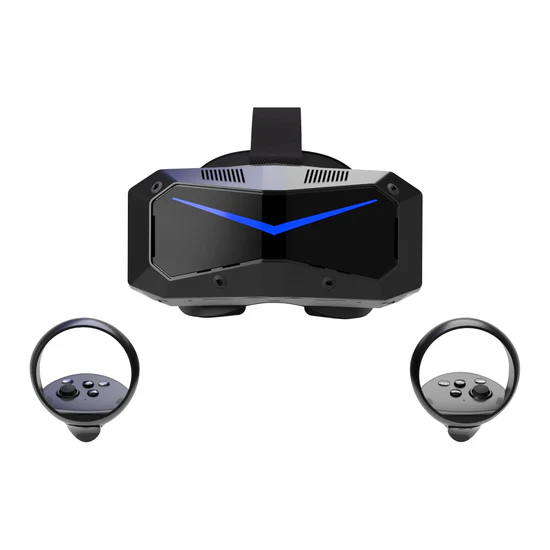
Pimax Crystal Super
3840×3840 per eye, up to 140° FOV, lossless DisplayPort From $1,599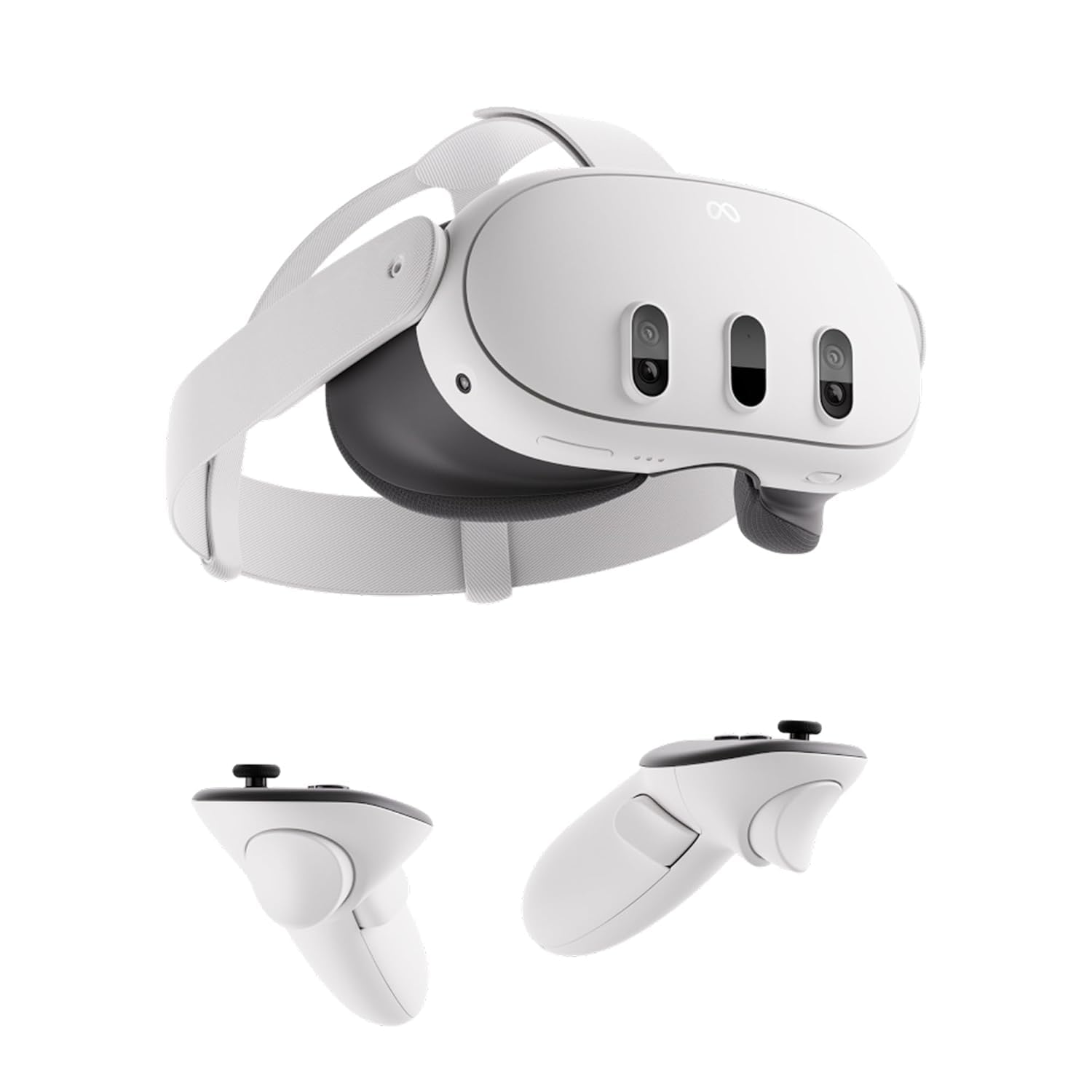
Meta Quest 3
2064×2208 per eye, ~110° FOV, fully standalone $599.99The short answer
You do not already own a gaming PC, you want it working tonight, or you want room-scale games, fitness and mixed reality. Quest 3 at $599.99 is the right answer for most people.
You sim race or fly, you already have an RTX 4080-class PC, and reading instruments at distance is the whole point. The Crystal Super has no real rival there.
You tried VR once in 2022 and felt sick. Comfort has improved, but if motion sickness stopped you before, borrow one before spending anything.
The Pimax range, and which one to actually buy
Pimax's naming is a mess — Crystal, Crystal Light, Crystal Super, Dream Air, Dream Air SE, all overlapping in price. These are the three that make sense in October 2026. Our full Pimax Crystal review goes deeper on day-to-day use if you want the long version.
3840×3840 per eye, QLED with mini-LED backlight, eye tracking, and swappable optics taking field of view from 106° to 140°. This is the headset the whole Pimax argument rests on. It wants an RTX 4080 or better — anything less and you are paying for pixels you cannot drive.
Check price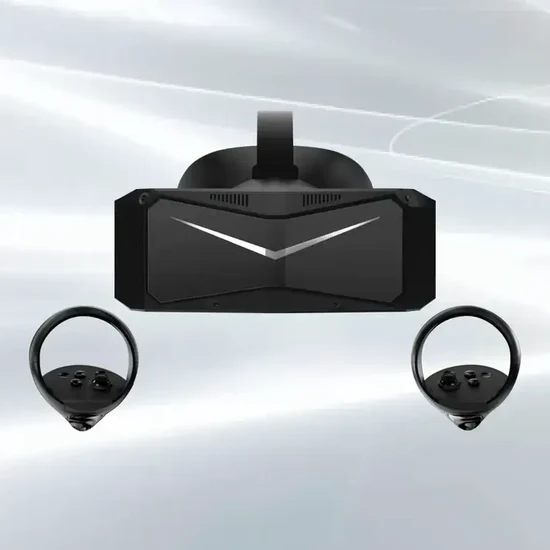
2880×2880 per eye at 120Hz, no eye tracking. The sensible entry point and the one most people should start with — it is the cheapest way to get a lossless DisplayPort picture, and 120Hz matters more than raw pixels once you are moving fast.
Check price
2560×2560 micro-OLED with eye tracking, in a much smaller body. Micro-OLED buys you true blacks, which matters enormously in space sims and night flying — the same panel family that reset expectations in FPV goggles. Note the 90Hz ceiling and that the listed resolution is upscaled — read the spec sheet carefully before choosing this over a Crystal Light.
Check priceMeta's side is simpler: the Quest 3 at $599.99 with 512GB, and the cheaper Quest 3S at $349.99 for 128GB or $449.99 for 256GB. Same Snapdragon XR2 Gen 2 chip in all three, so games run identically. The 3S trades pancake lenses for Fresnel, drops to 1832×1920 per eye and about 96° of view, and loses the depth sensor — which makes its passthrough noticeably grainier.
Six rounds, head to head
Six categories that actually change the decision. It finishes three apiece. Violet rounds went to Pimax, blue rounds to Meta.
Visual fidelity
Pimax winsAbout 3.4 times the pixels of a Quest 3, fed over DisplayPort with no compression. The practical result is text you can read: aircraft instruments, cockpit dials, distant number boards.
Genuinely good, and sharp edge to edge thanks to the pancake optics. But PC content arrives compressed over Link or Air Link, and compression is what you notice before resolution.
Verdict: Not close on paper or in use. The gap is widest exactly where it matters — small text at distance. See the Crystal range →
Field of view
Pimax winsSwappable lenses run from 106° to 140°. Past roughly 120° the black border stops registering as a border, and that is the thing people mean by immersion.
Respectable and well above the Quest 2. The 3S is the one to watch here: 96° is a visible step back, and it is the clearest reason to pay up for a Quest 3 rather than a 3S.
Verdict: Field of view is the spec people underrate and then cannot unsee. If you have tried VR and felt like you were looking through a letterbox, this round is the one that matters to you.
What it really costs
Meta winsThe headset is the smaller half of the bill. Add an RTX 4080-class GPU to actually drive it and the real entry cost lands north of $3,000. No PC, no picture — there is no degraded standalone mode to fall back on.
That is the whole cost. A Quest 3S at $349.99 is lower still. Both work on their own, and both can also borrow your PC later over Link if you ever get one.
Verdict: This is the round most comparisons skip, and it is the one that decides the purchase for the majority of readers. A Pimax is not a $1,599 product unless the PC was already there.
Meta raised Quest prices on 19 April 2026, blaming a global surge in memory chip costs. Quest 3 512GB went $499.99 → $599.99; Quest 3S 128GB $299.99 → $349.99; Quest 3S 256GB $399.99 → $449.99. A great many articles still quote the old numbers, which quietly overstates Quest's price advantage by around 20%. The increase was still in force when we checked in October 2026.
Setup and everyday friction
Meta winsA cable to the PC, a client to configure, SteamVR underneath it, and driver conflicts that are a recurring theme in owner reports. It rewards patience and punishes casual use.
Charge, pair a phone, draw a boundary, go. The same self-contained logic that makes a handheld like the Retroid Pocket easy to live with — nothing else in the chain to fail.
Verdict: Friction decides how often a headset gets used. A Quest gets picked up because it is easy; plenty of Pimax owners love theirs and still use it less than they expected.
Content and ecosystem
Meta winsPimax has no store. You are playing SteamVR titles, which is a strong library — but every one of them runs on a Quest over Link too, so this is not exclusive territory.
The Quest store's standalone catalogue, mixed-reality apps that need the depth sensor, fitness titles, plus SteamVR over a decent USB-C Link cable. It is the only one of the two that covers both sides.
Verdict: A Quest can do everything a Pimax does, worse. A Pimax cannot do what a Quest does at all. That asymmetry is the strongest argument in Meta's favour.
Sim racing and flight
Pimax winsEvery Pimax weakness disappears in a cockpit. You are seated, so the cable is irrelevant. The PC is already there driving the sim. And wide FOV plus readable instruments is precisely what the use case demands.
Perfectly usable for casual sim work and far cheaper. But compressed video and a narrower view are felt most sharply in exactly this scenario — distant apexes, small gauges, peripheral awareness.
Verdict: If your headset will spend its life bolted to a rig next to a direct-drive wheel, this round outweighs the other five combined. Shop Pimax →
Category scorecard
Each category splits ten points between the two. The wider the block, the more of that category that brand takes.
See the gap in a real cockpit
Spec sheets are poor at conveying what resolution does to a cockpit. This side-by-side in Star Citizen — a game built around reading instruments and spotting things at distance — shows the difference better than any number:
Video: tenpoundfortytwo
Note what the comparison does not show: the PC running behind the Pimax, or the hour of configuration before recording. That is the honest asterisk on every Pimax demo video you will watch, including this one.
Full specification comparison
| Spec | Pimax Crystal Super | Meta Quest 3 |
|---|---|---|
| Price | From $1,599 | $599.99 (512GB) |
| Cheaper model in range | Crystal Light — from $899 | Quest 3S — from $349.99 |
| Resolution per eye | 3840×3840 | 2064×2208 |
| Field of view | 106°–140° (swappable optics) | ~110° |
| Refresh rate | 90Hz (Crystal Light 120Hz) | Up to 120Hz |
| Display tech | QLED + mini-LED backlight | LCD, pancake lenses |
| Eye tracking | ✓ Yes | ✗ No |
| Works without a PC | ✗ No — PC required | ✓ Fully standalone |
| PC connection | ✓ DisplayPort, lossless | Link / Air Link, compressed |
| Own content store | ✗ SteamVR only | ✓ Quest store + SteamVR |
| Mixed reality passthrough | Limited | ✓ Colour + depth sensor |
| Minimum GPU | RTX 2070 class | None |
| GPU for full quality | RTX 4080 / 4090 class | Not applicable |
| Returns window | 14-day money-back | Standard Meta Store policy |
| Payment options | Affirm / Klarna instalments | Standard retail |
The part Pimax reviews skip: the software
Pimax's hardware is genuinely class-leading. Its software has been its weak point for as long as the company has existed, and that gap has not closed as fast as the hardware has advanced.
The Pimax Play client sits between your PC and SteamVR, and owner reports consistently describe driver conflicts, settings that need re-applying, and firmware updates that fix one thing while unsettling another. None of this is fatal — people run these headsets happily for years — but it is a different relationship with a product than putting on a Quest and pressing a button.
This is the honest reason to start with a Crystal Light at $899 rather than jumping to a Crystal Super. Find out whether you enjoy the tinkering before committing another $700 to it, and use the 14-day return window properly — set the thing up the week it arrives, not the month after.
Which should you buy?
Pros and cons
- 3840×3840 per eye — nothing mainstream comes close
- Up to 140° field of view with swappable optics
- Lossless DisplayPort, no compression artefacts
- Eye tracking on Crystal Super and Dream Air
- Micro-OLED option for true blacks
- 14-day money-back guarantee, Affirm/Klarna available
- Useless without a gaming PC — no standalone mode
- Real entry cost north of $3,000 with a suitable GPU
- Software and driver experience is the weak link
- No content store of its own
- Product naming is genuinely confusing
- Warranty duration not stated on the store page
- Completely self-contained — no PC, no cables
- Quest store plus SteamVR over Link
- Colour passthrough with depth sensor on Quest 3
- Working within five minutes of opening the box
- Quest 3S from $349.99 for the same chip
- Huge install base, so content keeps coming
- Prices rose about 20% in April 2026
- PC VR is compressed, not lossless
- No eye tracking on Quest 3 or 3S
- Quest 3S field of view drops to roughly 96°
- Battery life limits long sessions
- Requires a Meta account
How to pay less at either brand
- Pimax: there is a standing $80 discount on Crystal Light and Crystal Super at the time of writing — check it has applied at checkout rather than assuming.
- Pimax: Affirm and Klarna instalments are offered, which matters more here than usual given the headset is only part of the spend.
- Pimax: buy the Crystal Light first. If you find you want more pixels, you will know exactly why — and if you don't, you saved $700.
- Meta: the Quest 3S at $349.99 runs the identical chip to the Quest 3. If you mostly play standalone games and don't care about passthrough quality, the extra $250 buys optics, not performance.
- Both: prices moved sharply in 2026 on memory costs. If you are reading a comparison that quotes $499 for a Quest 3, it predates April and its conclusions are stale.
- Pimax Crystal review — our full hands-on with the headset this comparison centres on
- Moza Racing review — the wheels and pedals most Pimax owners pair with
- Skyzone FPV goggles review — micro-display tech in a very different headset
- Retroid Pocket review — standalone gaming with the same no-PC appeal
- OtterBox vs TORRAS — another head-to-head, if you like this format
Frequently asked questions
Is Pimax better than Meta Quest 3?
Pimax is sharper and wider — the Crystal Super runs 3840×3840 per eye against the Quest 3's 2064×2208, with up to 140° of field of view against roughly 110°. But Pimax needs a gaming PC to work at all, while the Quest 3 runs on its own. For most buyers the Quest 3 is the better headset; for sim racing and flight simulation on a strong PC, Pimax is in a different class.
Does Pimax work without a PC?
No. Every current Pimax headset is a PC VR display and requires a Windows gaming PC connected by DisplayPort or the wireless airlink kit. There is no standalone mode, no onboard store and no battery-powered operation. Meta Quest headsets are the opposite: fully standalone, with optional PC connection via Link or Air Link.
What PC do you need for a Pimax Crystal Super?
An RTX 2070-class GPU clears the official minimum, but that is a floor rather than a target. An RTX 3080 or 4070 handles medium sim settings, and an RTX 4080 or 4090 class card is what actually unlocks the resolution you paid for. Budget for the GPU as part of the headset's cost, not separately.
Why did Meta Quest prices go up in 2026?
Meta raised Quest prices on 19 April 2026, citing a global surge in memory chip prices. The Quest 3 512GB went from $499.99 to $599.99, the Quest 3S 128GB from $299.99 to $349.99, and the Quest 3S 256GB from $399.99 to $449.99. Many comparison articles still quote the older figures, which overstates Quest's price advantage.
Is the Pimax Crystal Light worth it over a Quest 3?
At $899 against the Quest 3's $599.99, the Crystal Light gives you 2880×2880 per eye at 120Hz and a lossless DisplayPort connection — a real visual upgrade for seated cockpit games. It is not worth it if you do not already own a capable gaming PC, or if you want room-scale games, fitness apps or anything from the Quest store.
Can you use a Meta Quest 3 for PC VR?
Yes. Quest Link over USB-C and Air Link over Wi-Fi both let a Quest 3 run SteamVR and PC titles. The picture is compressed rather than lossless, so it is a step below a native DisplayPort headset like Pimax, but it means a Quest 3 covers both standalone and PC use from one purchase.
Is Pimax software reliable?
Software has historically been Pimax's weakest area, and the Pimax Play client has a long community reputation for rough edges, driver conflicts and fiddly setup. The hardware is genuinely class-leading; the experience of getting it running is not comparable to putting on a Quest. Budget patience alongside the money, and keep the 14-day return window in mind while you test.
The verdict
Most people should buy a Meta Quest 3. It costs $599.99 and that is the entire bill. It works tonight, it plays its own library and borrows your PC's if you have one, and it does mixed reality and room-scale things a Pimax simply cannot. For a first headset, or for a household where more than one person will use it, there is no real argument.
But buy Pimax if you already have the PC and you sit down to use VR. In a cockpit — racing, flying, space — the Crystal Super's resolution and 140° field of view are not a marginal upgrade, they change what you can see and therefore how you play. Start with the Crystal Light at $899 unless you own a 4080-class card, in which case the Super is the one you actually want.
The rounds finished three apiece, and that is the finding rather than a dodge. These are not competitors so much as different categories of object that happen to strap to your face. The question is never which is better — it is whether you already own the computer that makes the expensive one work.