


Looking through most VR headsets still feels like squinting through a letterbox — and for sim racers and virtual pilots, blurry brake markers and unreadable instrument panels aren't an aesthetic problem, they're a performance one.
Pimax built its reputation solving exactly that: glass lenses, enormous resolution, wide field of view, aimed squarely at the iRacing and DCS crowd. Since our original review, the lineup has been completely reshuffled — the original Crystal is gone, a new flagship has landed, and an entire second product family exists. We've re-verified everything against the store as of August 2026, so this is the current state of play, not February's.
What's Changed Since Our Last Review
If you read our February version, here is the delta in one place. The original Crystal is discontinued — its slot is now filled by the Crystal Super (3840×3840 per eye, up to 57 PPD, eye tracking, swappable optical engines), currently $200 off at $1,599 in the SuperOpen sale. A second family exists: the compact micro-OLED Dream Air ($1,999–$2,299) and Dream Air SE ($899–$1,199). A Sony 8K Micro-OLED edition of the Super ($2,199) is on pre-order for people who want OLED blacks at 53 PPD. The minimum PC requirement for the Crystal Light has dropped — an RTX 2070-class card now clears the official floor, where we previously reported RTX 3080. And Pimax's two-price checkout — the Pimax Prime model — is now the single most-asked question about the brand, so we've explained it properly below.
Pimax at a Glance
Pimax Crystal Light
Two years on, this is still the smartest clarity-per-dollar buy in PCVR. 2880×2880 per eye through glass aspheric lenses, 35 PPD, a 110° field of view and 72/90/120Hz modes — enough to read brake boards at 200 metres and G1000 text without a zoom bind. The software has matured, the price has settled at $899 full payment, and right now every unit ships with your choice of a free accessory bundle: prescription lenses, a $99.95 Antlion mic, cable management, or DCS Mirage F1 add-ons.
$899 full payment · $599 upfront via Pimax Prime — explained below
Check Crystal Light Price →Which Pimax Should You Buy?
Five headsets, three display technologies and a swappable-lens system make this lineup genuinely confusing from the outside. Here is the honest mapping:
The 3 Pimax Headsets Worth Your Shortlist
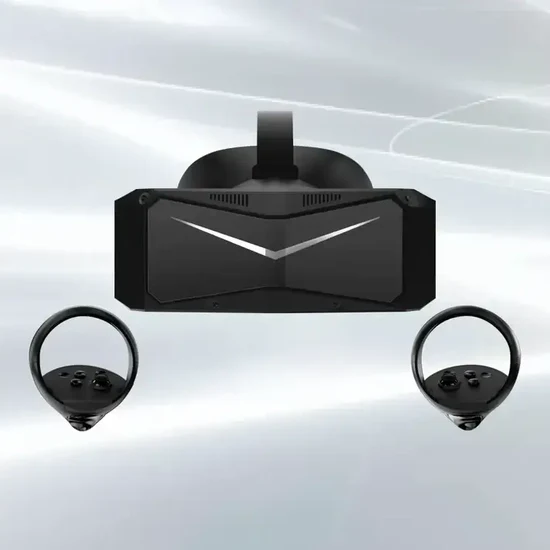
The default choice. Pure PCVR — no battery, no standalone chip, just 2880×2880 per eye through glass, at up to 120Hz. Pick one free bundle at checkout: prescription lenses, Antlion ModMic, VR Wire cable kit, or DCS F1 add-ons.
View Details →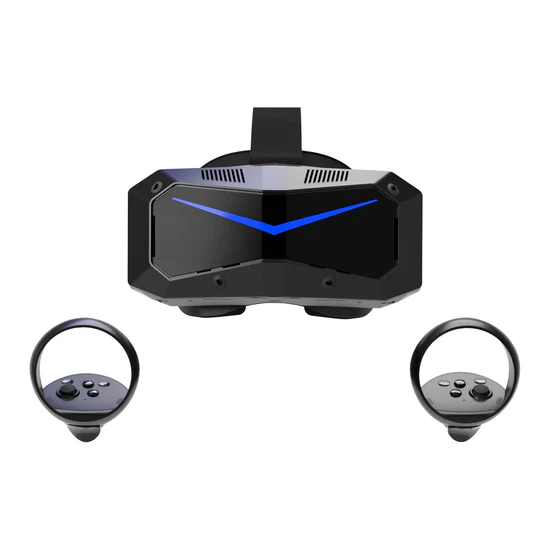
The endgame. 3840×3840 per eye at 50 or 57 PPD, eye tracking for foveated rendering, and a party trick nobody else has: swappable optical engines, including a 140° Ultrawide and a Sony 8K OLED module. Owner reviews from DCS and AMS2 players are borderline euphoric.
View Details →
For comfort obsessives. Micro-OLED panels in a compact, goggle-sized form factor — Crystal Light money for OLED blacks and a fraction of the bulk on your face. The trade: it's the newest line, so the community knowledge base is thinner.
View Details →See the Clarity Difference
Resolution numbers don't convey what 35+ PPD through glass actually looks like versus a compressed Quest stream. Two minutes through the lens is worth the scroll.
Pimax Prime Explained: Why There Are Two Prices
The single most confusing thing on any Pimax product page is the pricing. The Crystal Light shows both $899 and $599; bundles show a range. Here's the decoder: Full Payment means one all-in price — $899, you own it, done. The lower figure is the upfront-payment route under Pimax Prime: you pay $599 for the hardware at checkout, and the remaining balance is billed afterwards as a Pimax Prime software payment once your trial window ends.
The total cost lands in the same territory either way — Prime mainly changes when you pay, and lets you walk away cheaper if you return the headset inside the trial period. Our advice: if the payment picker offers you both, treat the full-payment number as the real price when comparing against a Quest 3 or a Bigscreen Beyond, and read the Prime terms on Pimax's own page before checkout, since the split option's availability shifts over time.
What Still Makes Pimax Different
The pixels-per-degree obsession isn't unique to simmers, incidentally — FPV drone pilots chase the same spec war in their goggles, as we found in our Skyzone review — but Pimax is the only PCVR maker that lets you re-spec the optics after purchase.
Sim Racing & Flight Sim Performance
In iRacing and ACC, clarity is a lap-time advantage: on the Crystal Light you can read brake marker boards from 200 metres out, where lower-resolution headsets render them as pixel mush until you're nearly on top of them. Precise braking references, earlier. Pair it with a direct-drive wheelbase — the Moza R5 we rated in our Moza Racing review remains the value pick — and you have a genuinely competitive rig for under $1,500 in peripherals. Pimax clearly knows its audience here: they currently bundle a free 12-month iRacing membership with qualifying headsets.
For MSFS and DCS World, the Light reads G1000 units and steam gauges without a zoom bind; the Super at 57 PPD is simply the sharpest cockpit image on sale anywhere, and the eye-tracked foveated rendering claws back the frames its resolution costs. Owner reviews from 4090-class rigs report 100% resolution in DCS with anti-aliasing switched off entirely — the pixels are dense enough to not need it.
Audio: Budget for the DMAS
The stock off-ear audio is the most consistent complaint in verified reviews — functional, thin, and the first thing owners upgrade. Pimax's own DMAS earphones (Valve Index-style, hovering off-ear, sold separately) are the standard fix and occasionally thrown in free with promos. The budget alternative that half the sim community quietly runs: IEMs under the strap — the $20-something 7Hz Zero from our 7Hz Salnotes review embarrasses headset speakers triple its price.
PC Requirements: The 2026 Reality Check
The Free Bundle System (Don't Skip This)
Every Crystal Light and Super currently ships with your choice of one free add-on bundle at the same price. Choose deliberately — this is real money:
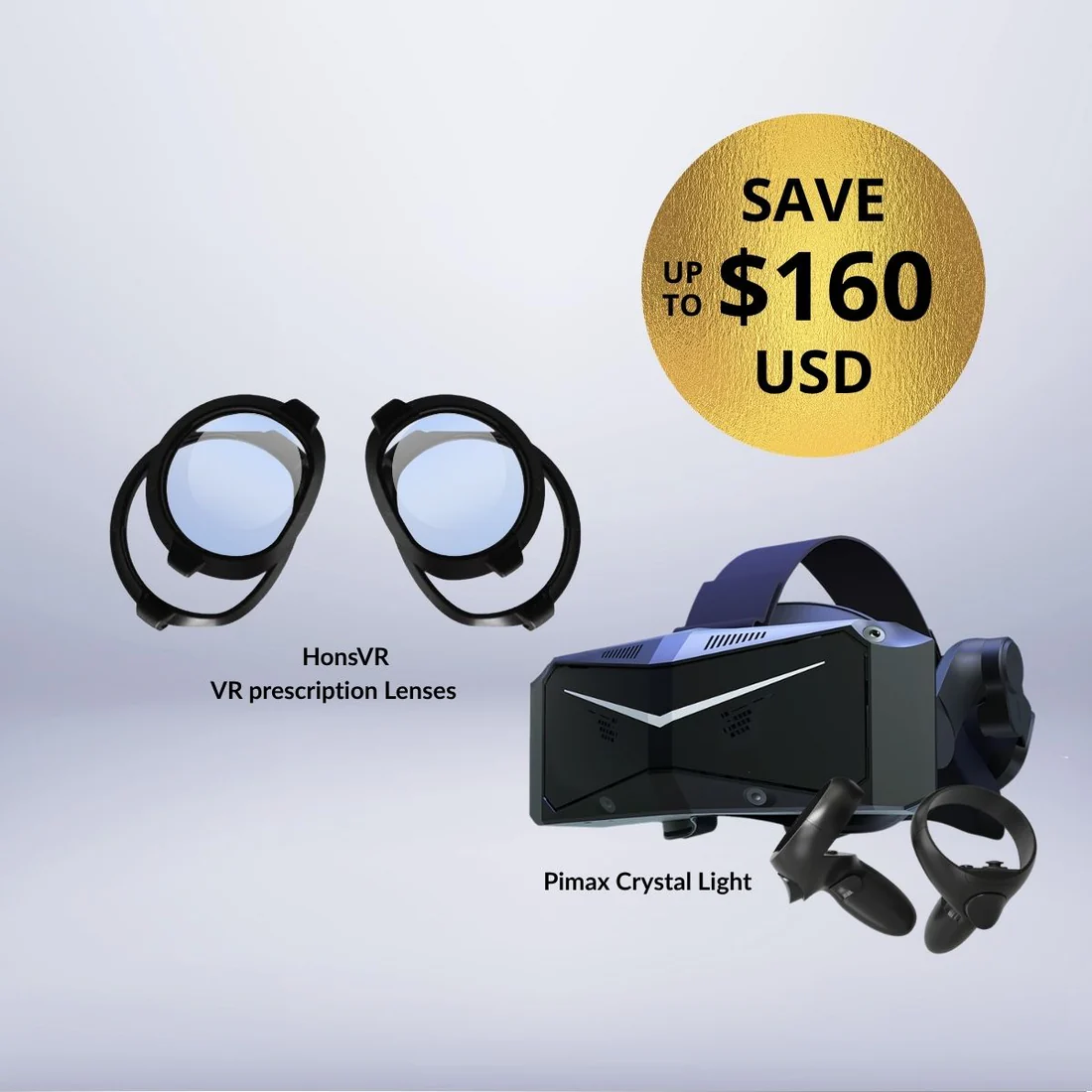
HonsVR Prescription Lenses
The pick for glasses wearers — custom inserts that protect the glass optics from scratches. Normally a $60+ third-party purchase.
View Bundle →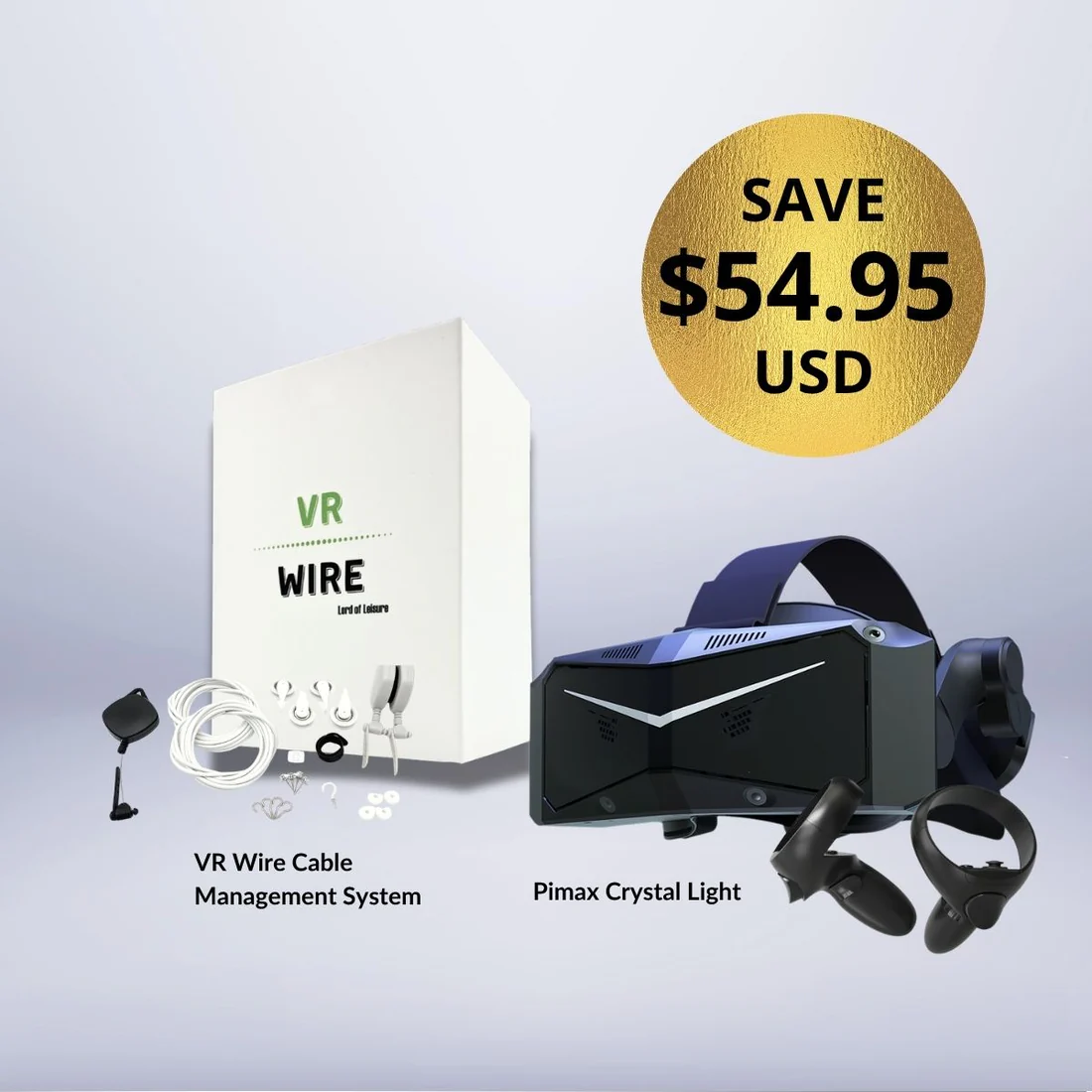
Antlion ModMic USB
The highest sticker value of the four. A proper boom mic for iRacing team comms and DCS multiplayer, redeemed by code.
View Bundle →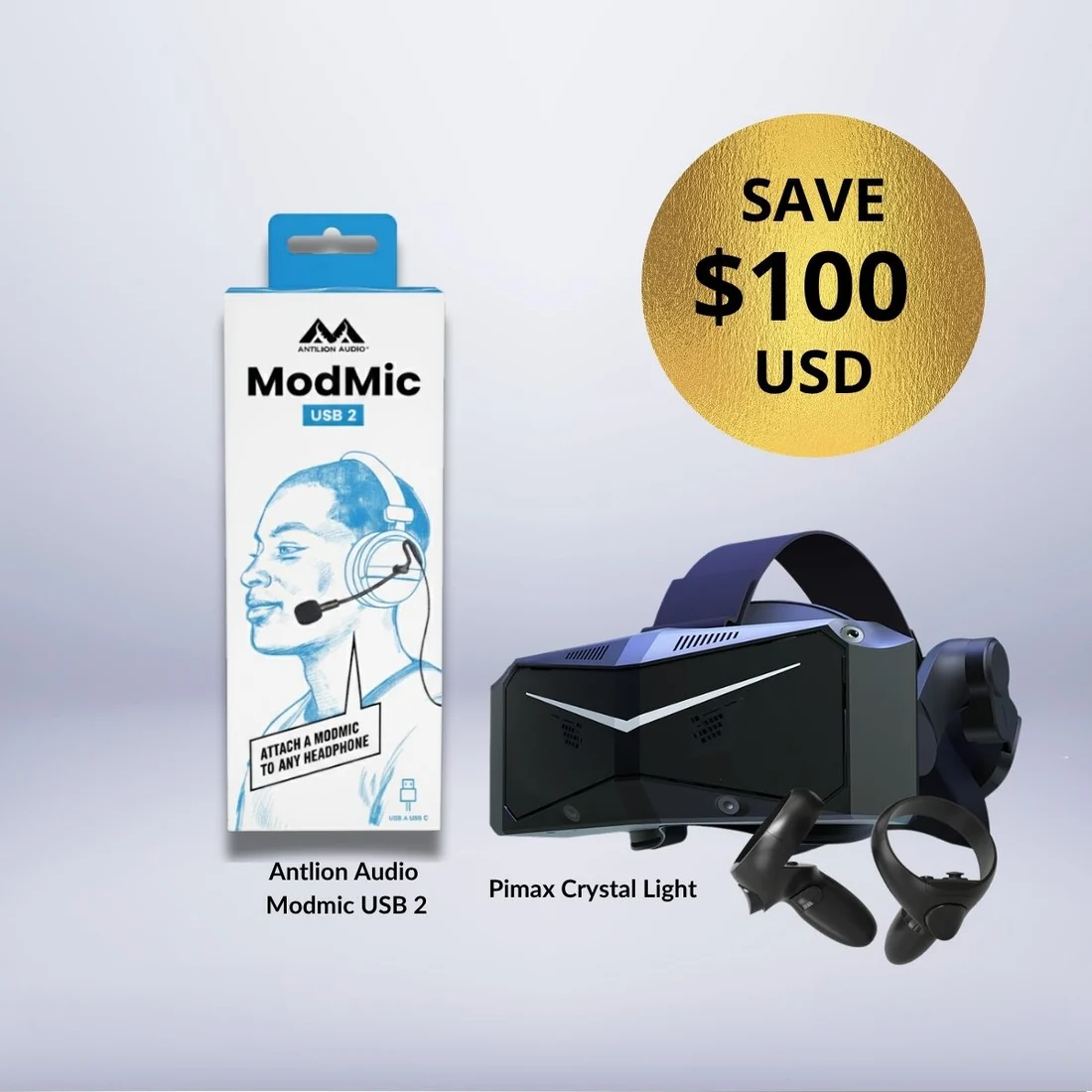
VR Wire Cable Management
The thick DP cable is Pimax's tax on clarity — a ceiling-pulley system tames it. The pick if you ever stand up in VR.
View Bundle →Buying From Pimax: The Fine Print
Pimax ships from local warehouses in the US, UK, EU, Australia, Japan and Canada (3–7 business days where stocked), backs headsets with a 12-month warranty and lifetime chat/email support, and takes Affirm instalments. Three things the product pages under-emphasise: displayed prices exclude VAT/GST, which lands at checkout — budget roughly 20% extra in the UK/EU. The return window is 14 days, and unless the unit is faulty, you pay the return shipping (or pre-buy their Return Shipping Assurance). And accessories carry a shorter 6-month warranty than the headsets themselves. None of this is a dealbreaker; all of it belongs in your maths before checkout.
Crystal Light vs Crystal Super vs Dream Air SE vs Quest 3
| Factor | Crystal Light | Crystal Super | Dream Air SE | Meta Quest 3 |
|---|---|---|---|---|
| Price (before VAT) | $899 | $1,599 |
$899–$1,199 | ~$499 |
| Per-eye resolution | 2880×2880 | 3840×3840 | Micro-OLED | 2064×2208 |
| Pixel density | 35 PPD | 50 / 57 PPD | High (compact optics) | ~25 PPD |
| Connection | DisplayPort, lossless | DisplayPort, lossless | DisplayPort, lossless | USB/WiFi, compressed |
| Eye tracking | No | Yes (foveated) | Varies by config | No |
| Standalone use | PC required | PC required | PC required | Yes |
The Quest 3 column is there for honesty, not mockery: at $499 with no PC required, it remains the right first headset for almost everyone. Pimax only makes sense once VR is specifically your sim rig's display — at which point the compressed-stream ceiling of a Quest becomes the thing you notice every session.
Performance Breakdown
Pimax Ratings (2026 Update)
Who Should Buy a Pimax?
- The competitive sim racer: reading brake boards two seconds earlier is a lap-time upgrade no wheel or pedal set can match at this price.
- The flight simmer: legible glass cockpits and steam gauges without zoom binds — the Light for most, the Super for the 4090 crowd.
- The upgrade path buyer: the Super's swappable optical engines mean your next optics upgrade doesn't require your next headset.
- The Reverb G2 refugee: Windows MR is dead; this is the natural landing spot, and the trade-in knocks $100 off the ticket.
Who should skip it: anyone without at least an RTX 2070 and a 12th-gen CPU, anyone who mainly plays standing room-scale games (the cable will drive you mad), and anyone for whom a $499 Quest 3 hasn't yet become the bottleneck.
Pros & Cons
- Unmatched clarity — up to 57 PPD through real glass.
- Lossless DisplayPort connection, zero compression.
- Swappable optical engines on the Super are unique.
- Free bundles + trade-in stack meaningfully.
- Local warehouses in six regions, lifetime support.
- Prime's two-price checkout confuses everyone at first.
- Displayed prices exclude VAT/GST — real cost is higher.
- 14-day returns, with buyer-paid return shipping.
- Stock audio is weak; budget for DMAS or IEMs.
- Still rewards tinkerers over plug-and-play users.
How to Buy Pimax Cheaper
Three levers, all stackable with each other where eligible: the SuperOpen sale currently has the Crystal Super at $1,599 — $200 under list. The free bundle picker is effectively $60–$100 of accessories on every Light and Super, with the Antlion ModMic the highest sticker value. And the trade-in program converts any old headset into up to $100 off a Light. Affirm handles instalments if you'd rather split it — just remember all of these prices are pre-VAT.
👉 7Hz Salnotes Review: the $20 IEMs half the sim community runs under the strap.
👉 Epomaker Review: the battlestation keyboard that won't embarrass the rest of the desk.
👉 AIYIMA Review: desktop amps for when the headset comes off.
Frequently Asked Questions
Why does the Pimax Crystal Light show two prices?
Pimax sells its headsets two ways. Full Payment is one all-in price — $899 for the Crystal Light — and you own it outright. The lower $599 figure is the upfront-payment route under Pimax Prime: you pay less for the hardware at checkout, and the remaining balance is billed later as a Pimax Prime software payment after your trial period. Total cost lands in the same territory either way; Prime mainly changes when you pay. Check the payment picker and Pimax's Prime page at checkout, as the split option's availability varies.
Crystal Light or Crystal Super — which should I buy?
The Crystal Light at $899 is the right call for most sim racers and flight simmers: 35 PPD through glass lenses is already a generational jump over a Quest 3. The Crystal Super at $1,599 on sale is the endgame — 3840×3840 per eye at up to 57 PPD with eye-tracked foveated rendering and swappable optical engines. Buy the Super only if your GPU is RTX 4080 class or better; otherwise the Light spends your budget more sensibly.
What PC do I need for a Pimax headset?
The hard minimum for the Crystal Light is an RTX 2070-class GPU and a 12th-gen Intel i5 or AMD equivalent — the CPU generation is a firm requirement, not a suggestion. Recommended is an RTX 3080 or 4070 for medium sim settings; an RTX 4080/4090-class card unlocks the best experience. The Crystal Super wants the top tier from day one.
Do Pimax headsets need base stations?
No. The Crystal Light and Super use inside-out tracking with onboard cameras — more than accurate enough for seated sims. If you later want SteamVR base-station tracking for standing play, both accept an optional Lighthouse faceplate sold separately.
Can I wear glasses with a Pimax?
The Crystal Super is designed to work with glasses. On the Crystal Light it's possible but risky — scratching the glass aspheric lenses is an expensive mistake. Prescription inserts are the safer route, and Pimax currently bundles free HonsVR prescription lenses with the headset at no extra cost.
What happened to the original Pimax Crystal?
It's been retired. Its role is split: the Crystal Light covers the value end, and the Crystal Super — higher resolution, eye tracking, swappable optical engines — replaces it as the flagship. Pimax's trade-in program takes up to $100 off a Crystal Light, or adds a gift on a Super, when you trade in a former headset.
Final Score: 9.2/10
Eighteen months ago, recommending a Pimax came with a list of asterisks. Most of them are gone: the software has matured, the lineup finally has coherent tiers, and the Crystal Super's swappable optics give it an upgrade path no rival offers. The remaining asterisks — Prime's confusing checkout, pre-VAT pricing, a 14-day return window — are annoyances, not dealbreakers. For sim racers and virtual pilots with the PC to feed it, this is still the clearest window into a cockpit that money buys.
Shop the Pimax Range →