


Astronomy has an ugly maths problem: the gear that gets you from "smudge in an eyepiece" to "photograph of the Veil Nebula" traditionally costs more than the car you drive to the dark site.
SVBONY is the brand that broke that pricing, and the astrophotography community's relationship with it is more interesting than most brand reviews admit. Their filters and accessories sit in rigs alongside gear costing five times as much. Their cameras use the same Sony sensors as the premium names. Their telescopes range from genuinely excellent to exactly-what-you-paid-for. And somewhere along the way they also started selling conference microphones and action cameras, which raises reasonable questions. We went through the whole catalogue to work out where SVBONY is a bargain, where it's merely cheap, and what a beginner should actually buy first.
SVBONY at a Glance
SVBONY SV503 70ED Refractor
The scope that made the astro community take SVBONY seriously. A 70mm f/6.78 ED refractor with FPL51 and lanthanum glass, and — the part that matters — a two-element field flattener built into the tube, giving a 32mm fully corrected flat field with no separate flattener to buy, thread or space correctly. Add a 1:10 dual-speed 2.5" RAP focuser and a retractable dew shield, and you have a wide-field imaging scope at a price that undercuts the obvious alternatives.
$395.99 OTA · photography set $891.99 · 80ED kits from $459.99
Check SV503 70ED Price →What SVBONY Is Actually Good At
Brand reviews usually deliver a single verdict. SVBONY doesn't work that way — its quality varies by category more than almost any optics brand, and knowing which tier you're buying into is the difference between a bargain and a regret.
Which SVBONY Should You Buy?
Find your situation below — every pick links straight to the product.
The Three Best Buys Right Now
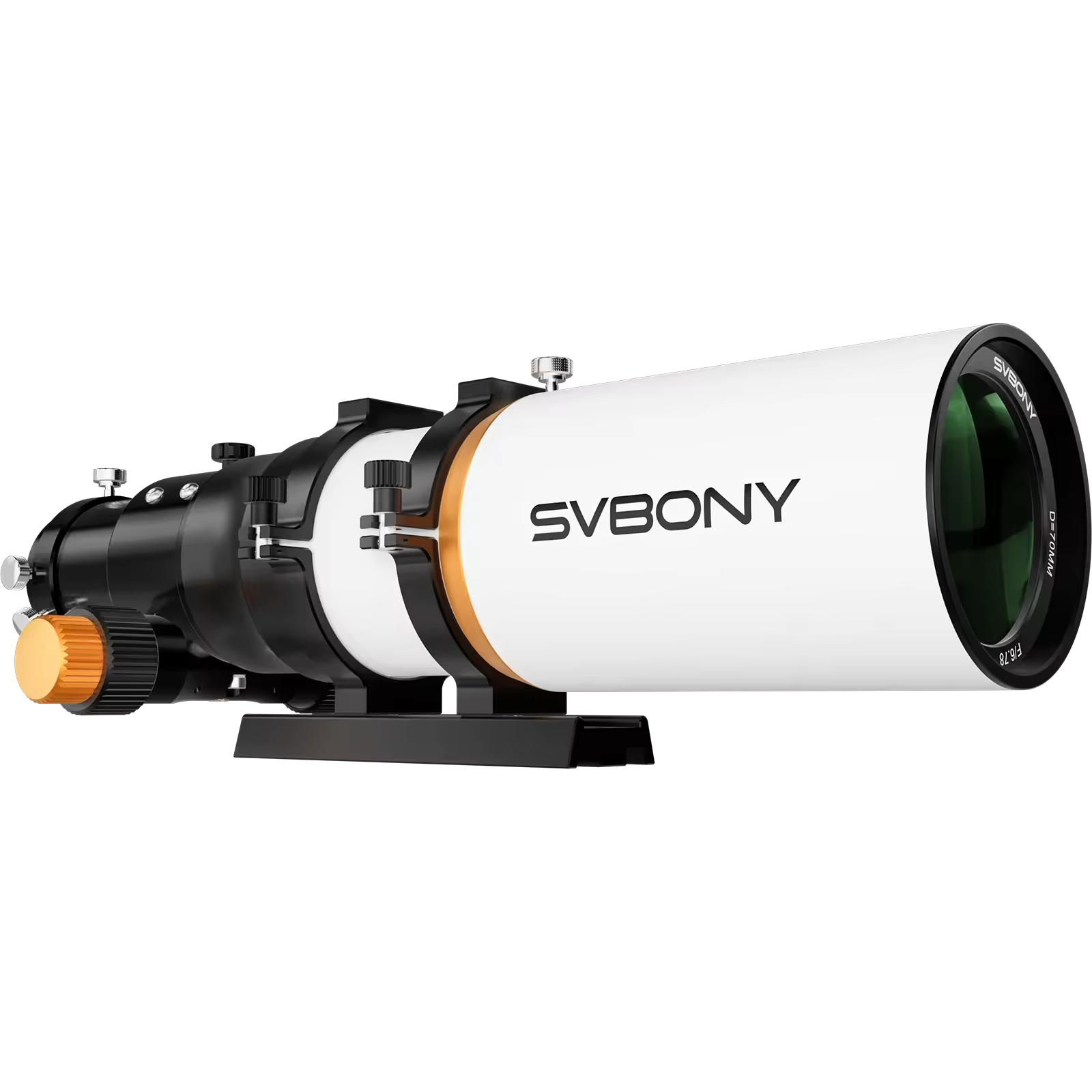
The imaging starter. 70mm f/6.78, FPL51 ED glass, built-in two-element flattener for a 32mm corrected field, 1:10 dual-speed focuser. Light enough at 2.7kg that a modest star tracker can carry it.
View Details →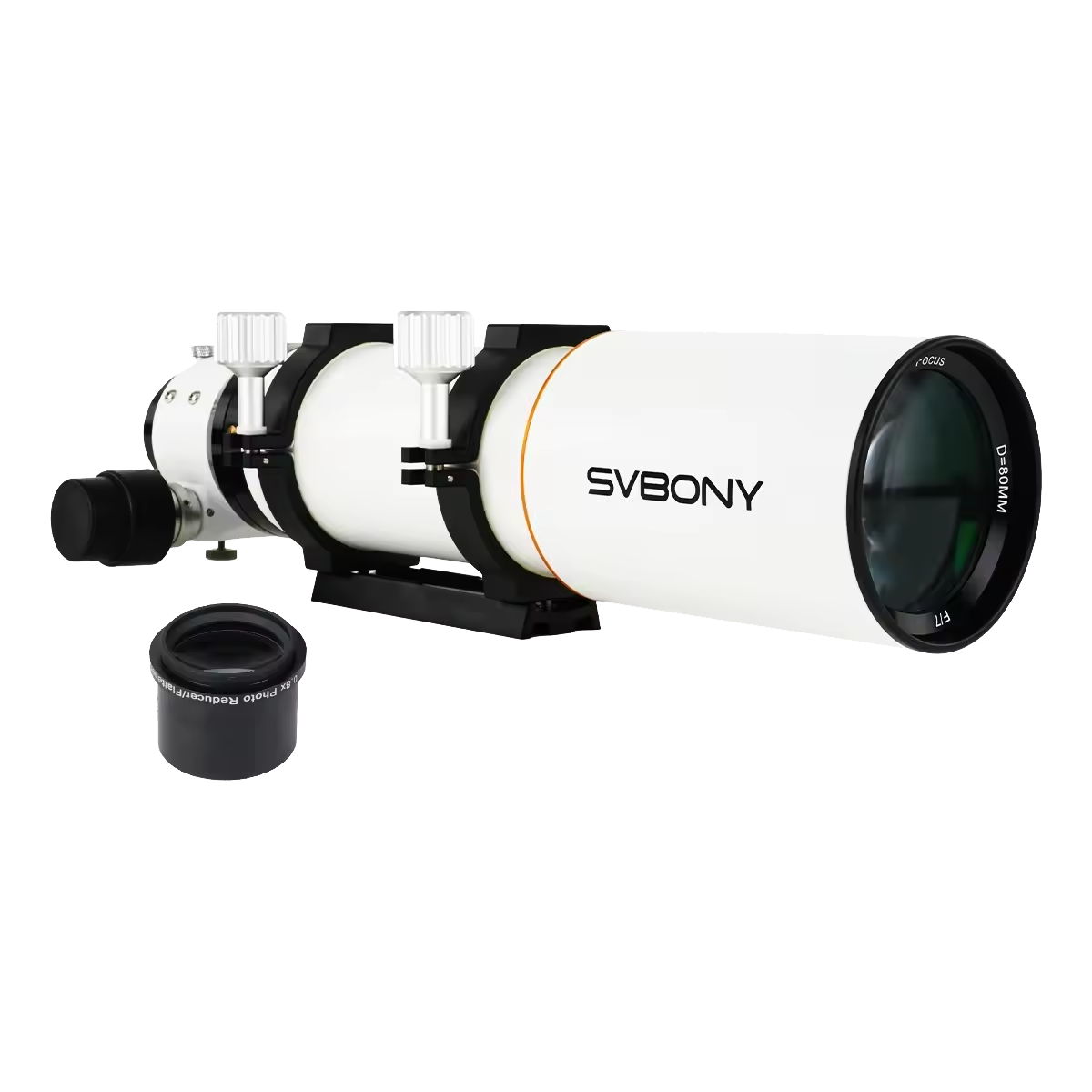
The value pick. More aperture than the 70, bundled with the 0.8x reducer/flattener that shortens focal ratio and flattens the field — a part most people buy separately three months in. Better maths than the bare tube.
View Details →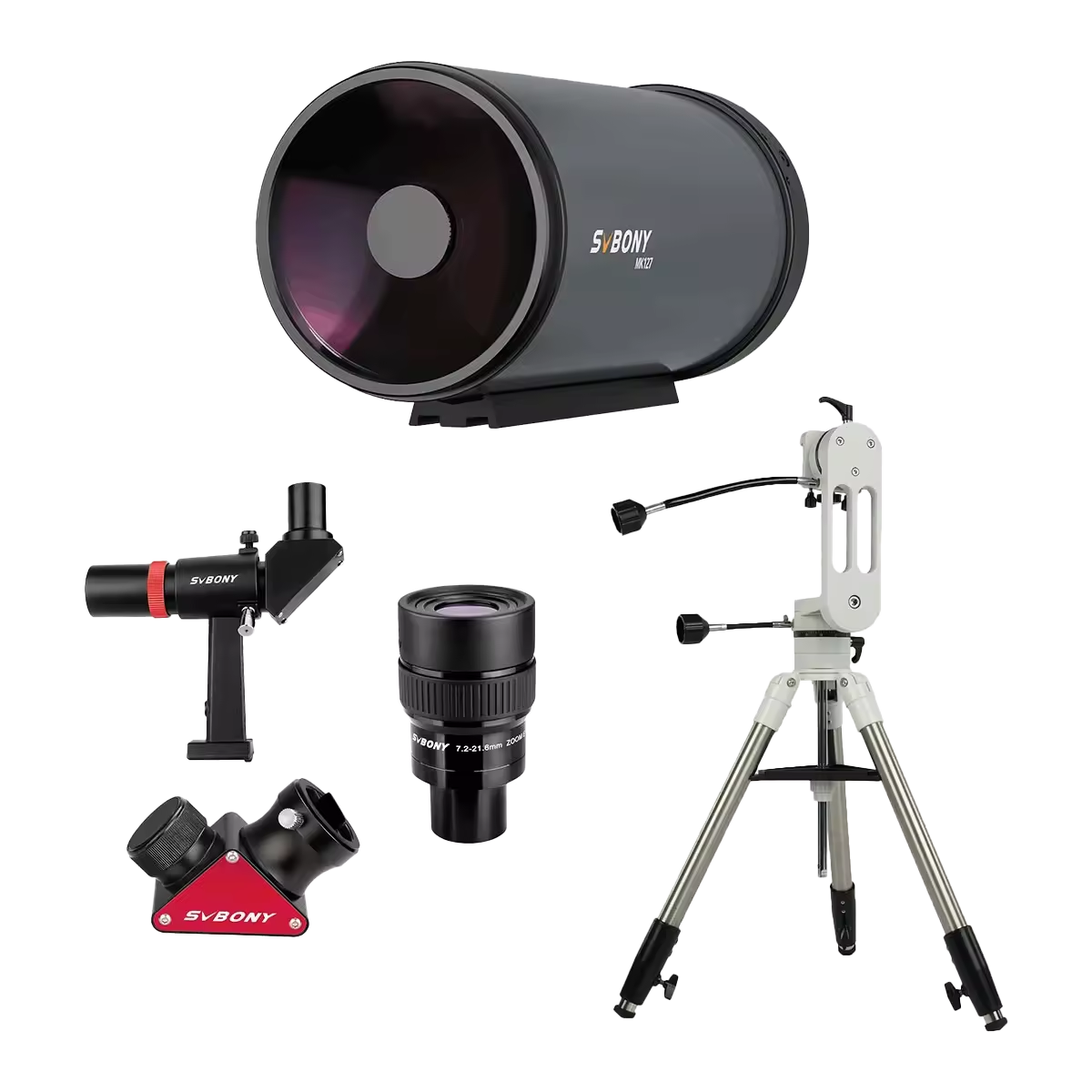
For planets, not nebulae. A Maksutov folds a long focal length into a short tube — exactly what you want for Jupiter's belts and lunar craters, and exactly what you don't want for wide nebulae. Ships as a complete kit with mount and tripod.
View Details →See What It Produces
Spec sheets say nothing about star shapes at the field edge. Real imaging footage does.
The OTA Trap (Read Before You Buy)
The Accessories Are the Real Story
Ask working astrophotographers about SVBONY and the conversation rarely starts with telescopes. It starts with filters. A 3nm narrowband filter from a premium brand is a serious investment; SVBONY's SV220 line delivers comparable narrowband performance at a fraction of it, and it turns up in rigs where every other component costs many times more. The same holds for eyepieces, focal reducers, off-axis guiders and dovetails — unglamorous parts where SVBONY's pricing is genuinely disruptive.
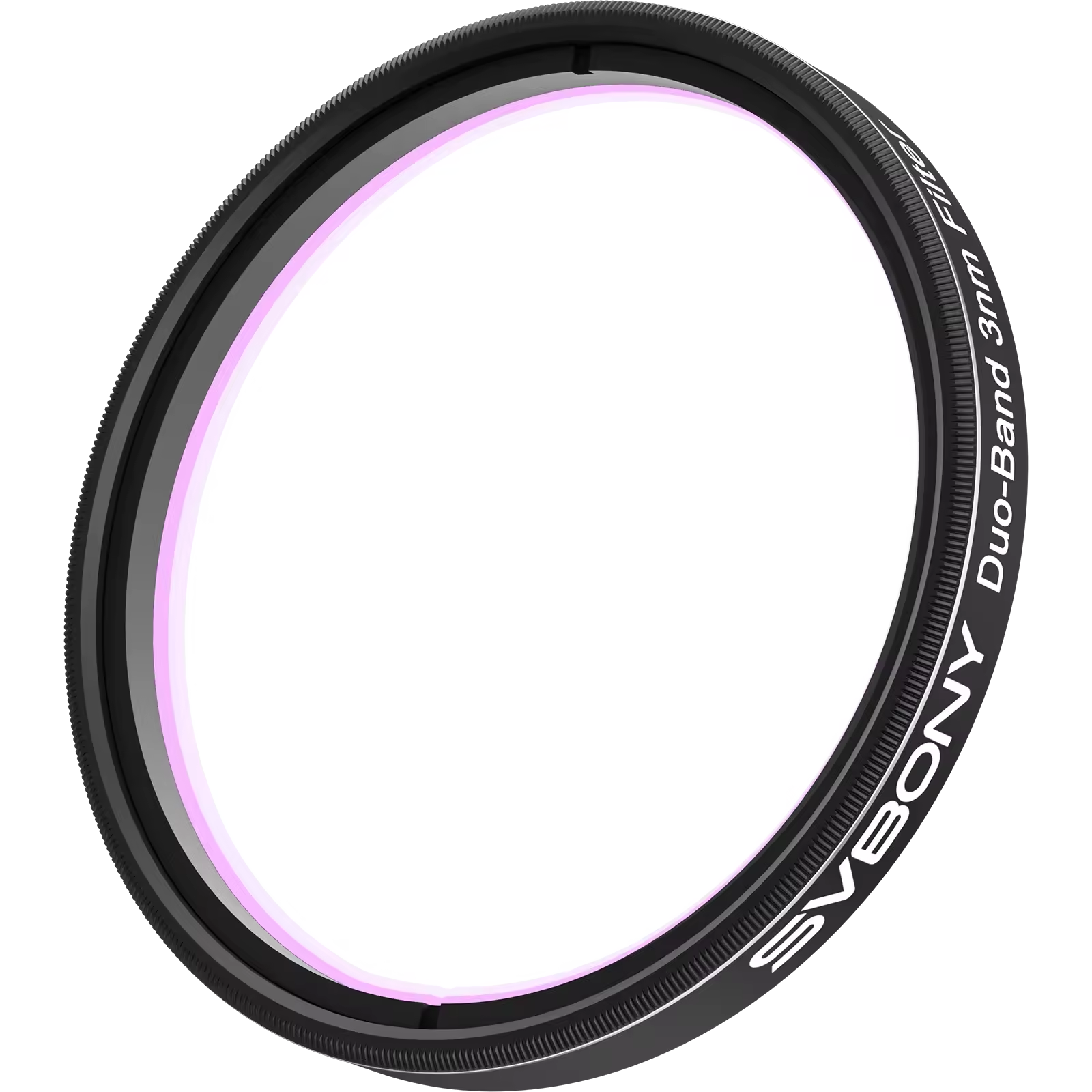
SV220 Narrowband Filter
3nm Hα/OIII dual-band. The single most transformative purchase for anyone imaging from a light-polluted back garden. A 7nm Hubble-palette set is also available.
View Filter →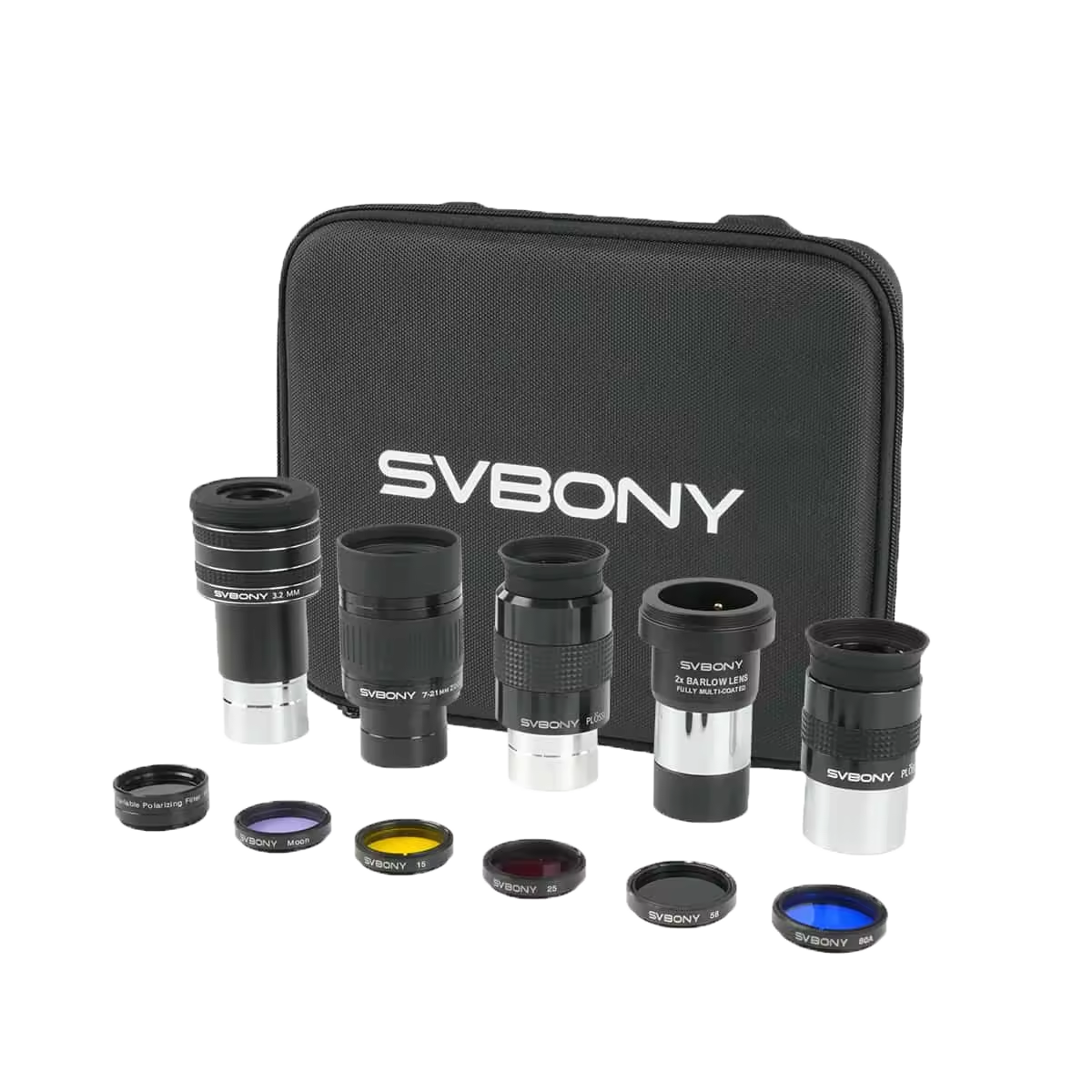
SV233 Accessory Kit
Eight pieces of 1.25" kit in one box — the fastest way to fill the gaps a bare OTA leaves. Cheaper than assembling the same parts individually.
View Kit →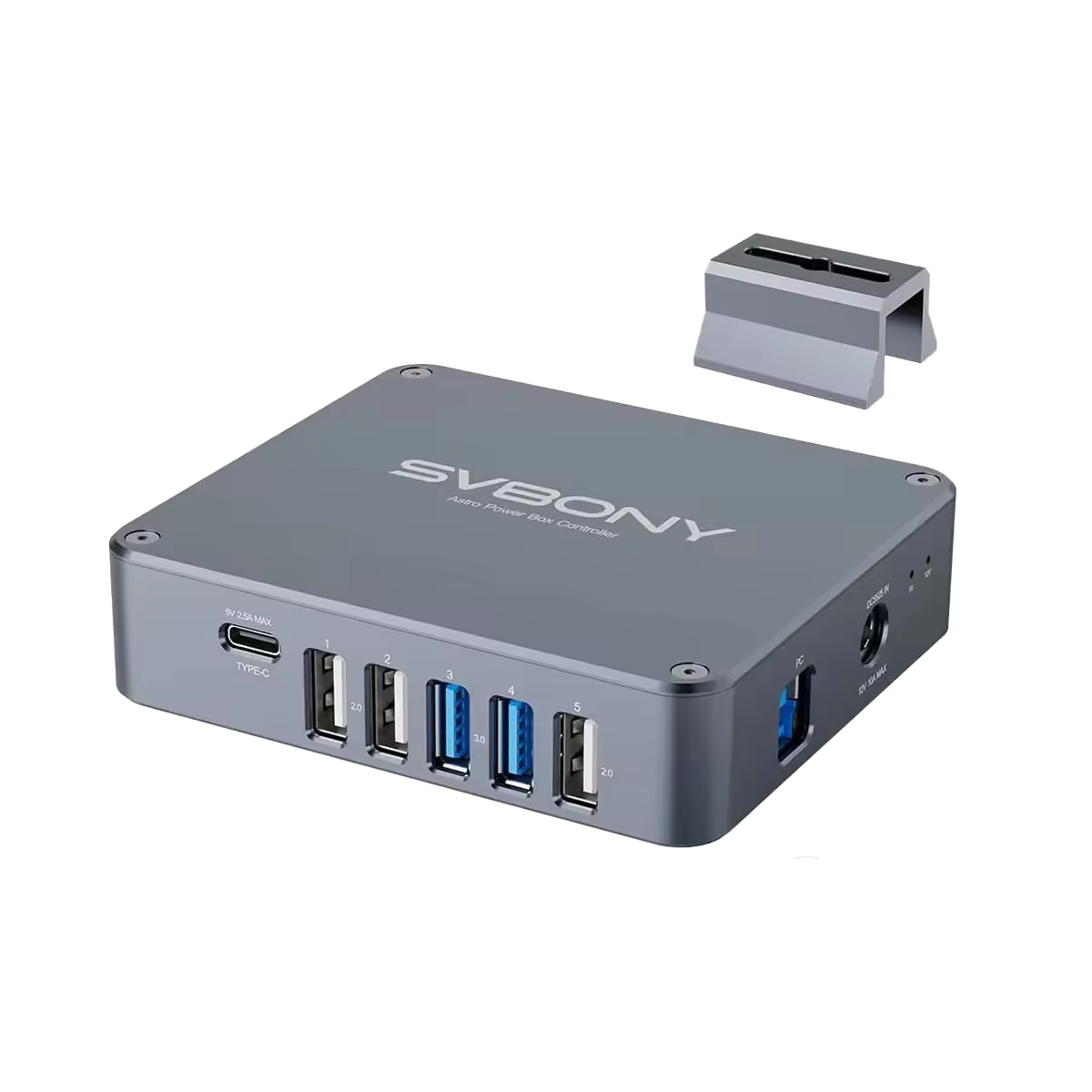
SV241 Pro Power Box
Runs mount, camera, dew heaters and focuser from one controlled 12V source. The thing that turns a tangle of adapters into a system you can run remotely.
View Power Box →One practical note on that last one: a power controller still needs something to draw from, and a dark site rarely has a mains socket. A LiFePO4 pack is the standard answer — the units in our Wattcycle battery review will run a mount, cooled camera and dew heaters through a full night with margin to spare.
Why Does an Astronomy Brand Sell Conference Microphones?
It's a fair question, and worth answering rather than ignoring. Alongside the telescopes, SVBONY sells action cameras (SVGo, $80.99–$139.99), wireless mics and conference audio (SVMic and SVHub, $21.99–$360.99), wireless HDMI transmitters (TransAir, $71.99–$132.99) and a full microscope line ($21.99–$200.99).
The charitable reading — and the accurate one — is that these all descend from the same core competencies: optics, sensors and video pipelines. The microscope range in particular is a natural adjacency, and the SV604 7-inch LCD microscope ($90.99) is explicitly aimed at circuit-board inspection, which makes it a genuinely useful bench tool rather than a novelty — pair it with the gear in our FNIRSI tools review and you have a competent electronics workstation. The student microscope bundles ($136.99–$158.99 with camera) also slot neatly beside the sort of hands-on kit we covered in our SunFounder review.
That said: nobody should buy SVBONY for the conference speakerphones. Those categories are competent and competitively priced, but they're not why the brand has a reputation. Judge SVBONY on its optics.
Is SVBONY Legit?
Yes, and the evidence is unusually good for a direct-to-consumer optics brand. Their site hosts a gallery of 217 customer astrophotographs — real Veil Nebula and Sadr Region images from named users, complete with the acquisition details. Independent astronomy YouTubers with genuine standing in the community, including Cuiv the Lazy Geek and Kamil Pękala, have published full reviews of the SV555, SV550 and SV220 lines.
The detail that impressed us most: SVBONY publishes its negative reviews. On the product pages we read, one customer says a planetary camera is "not great for planets," another criticises diffraction spikes on a budget refractor, and a third says an off-axis guider needs a design change. Leaving those up is a stronger trust signal than any five-star average.
Practicalities: free shipping (typically 3–7 business days, some items 4–9 expedited), a 30-day money-back guarantee, a hassle-free warranty including lifetime firmware updates, and lifetime email support. The company operates out of Hong Kong, and support is email-based rather than phone.
About Those Permanent Discounts
SVBONY vs Premium Astro Brands vs No-Name Optics
| Factor | SVBONY | Premium (ZWO, Celestron) | No-Name Amazon Optics |
|---|---|---|---|
| Camera sensors | Sony IMX, same as rivals | Sony IMX | Unspecified |
| Narrowband filters | 3nm/7nm, strong value | Excellent, premium priced | Rarely offered |
| ED glass telescopes | SV503/550/555 well reviewed | Broader, more consistent | Achromats sold as "HD" |
| Software ecosystem | Functional, less mature | Deep and well supported | Minimal |
| Resale value | Moderate | Strong | None |
| Community documentation | Growing, real reviewers | Extensive | None |
The honest summary: SVBONY sits genuinely between the premium names and the no-name optics, and much closer to the top than the price gap implies. What you give up is ecosystem maturity and resale value — real costs, but ones most beginners and intermediates will happily trade for spending half as much on glass.
Performance Breakdown
SVBONY Ratings
Who Should Buy SVBONY?
- The beginner astrophotographer: the SV503 70ED plus a narrowband filter is a legitimate imaging setup for less than one premium telescope tube.
- The experienced imager filling gaps: filters, reducers, OAGs and eyepieces where the premium tax buys you little.
- The urban observer: a 3nm narrowband filter does more for a light-polluted sky than any aperture upgrade at this price.
- The field-kit builder: the SV241 power box, a LiFePO4 pack and a padded case turn a garden setup into a dark-site rig — our Tomtoc review covers the carry side of that.
Who should think twice: anyone who wants a plug-and-play GoTo experience with polished software, anyone buying purely on resale value, and anyone tempted by the cheapest achromatic tubes — those are the listings where SVBONY's reputation gets undeservedly dented.
Pros & Cons
- Filters and accessories are outstanding value.
- Cameras use the same Sony sensors as rivals.
- SV503 built-in flattener removes a whole purchase.
- Publishes critical customer reviews openly.
- Free shipping, 30-day returns, lifetime support.
- Quality varies sharply across the catalogue.
- OTA listings omit mount, diagonal and eyepieces.
- Permanent "sale" pricing makes value hard to judge.
- Software ecosystem trails the premium brands.
- Catalogue sprawl dilutes the optics focus.
How to Buy SVBONY Cheaper
Four levers. The 2026 Summer Deals event is live at up to 45% off, with spotting scopes discounted up to 40%. Signing up gets $10 off your first order plus 100 loyalty points, which is free money on a purchase this size. Every product accrues points toward future orders — the SV503 70ED alone earns 39. And buy the kit, not the tube: bundle pricing across the SV503 range consistently beats assembling the same components separately, sometimes by $200 or more.
See Current Summer Deals →👉 Tomtoc Review: padded carry for optics and accessories.
👉 FNIRSI Review: bench tools to pair with an inspection microscope.
👉 Autel Robotics Review: for when you'd rather point the sensor down.
Frequently Asked Questions
Is SVBONY a good brand for astronomy?
Yes, with an important nuance. SVBONY's strongest work is in accessories and imaging — narrowband filters, eyepieces, focal reducers, off-axis guiders and Sony-sensor astronomy cameras all punch well above their price and appear in serious astrophotographers' rigs. The telescopes are more variable: the SV503 ED refractor line is genuinely well regarded, while the cheaper achromatic tubes show the compromises you'd expect at their price. Buy the accessories with confidence; research the specific telescope model before committing.
Which SVBONY telescope is best for beginners?
It depends what you want to look at. For deep-sky astrophotography, the SV503 70ED at around $396 is the natural starting point, because its built-in field flattener removes a component most beginners buy later anyway. For planetary and lunar viewing, a Maksutov-Cassegrain like the MK90 or MK105 packs long focal length into a compact tube. Buying a bundle kit rather than a bare tube is usually better value, since a telescope needs a mount, a diagonal and eyepieces before it produces a single image.
Do SVBONY telescopes come with everything you need?
No, and this catches beginners out. A bare OTA listing includes the optical tube, tube rings, a dovetail plate and covers — no mount, no tripod, no eyepieces, no diagonal. SVBONY also notes that the SV503 70ED specifically needs a diagonal or extension tube fitted in order to reach focus at all. Check the package contents carefully, or buy one of the complete kit bundles instead.
Is SVBONY as good as ZWO or Celestron?
Not identical, but far closer than the price gap suggests. SVBONY astronomy cameras use the same Sony IMX sensors found in more expensive rivals, and their narrowband filters are used routinely alongside premium brands. Where the established names still lead is software ecosystem maturity, resale value and depth of long-term support. For a beginner or intermediate imager, SVBONY delivers most of the capability at a meaningful discount.
Why is everything on the SVBONY site always on sale?
SVBONY runs near-continuous promotions, and many bundle listings show large crossed-out list prices beside much lower selling prices. Treat the crossed-out figure as notional rather than a price anyone recently paid, and judge the deal on the actual selling price against competing products. The practical upshot: you rarely need to wait for a sale, because there's almost always one running.
What warranty and returns does SVBONY offer?
A 30-day money-back guarantee, free shipping, a hassle-free warranty including lifetime free firmware updates on applicable devices, and lifetime technical and customer support by email. Shipping typically takes 3–7 business days, though some items ship expedited in 4–9. The company operates from Hong Kong, and support is email-based rather than phone.
Final Score: 8.9/10
SVBONY is the rare budget brand that earned its reputation on the parts experts actually scrutinise. The filters, cameras and ED refractors are genuinely good, and the price gap to the premium names is wider than the quality gap. The catch is that this is a catalogue you have to navigate rather than trust wholesale — buy the SV503 line and the accessories, buy kits rather than bare tubes, and read the package contents before you click. Do that, and it's the cheapest credible route into astrophotography going.
Shop the SVBONY Store →